Midface Ratio: The Most Underrated Driver of Your PSL Score
Last updated: May 31, 2026
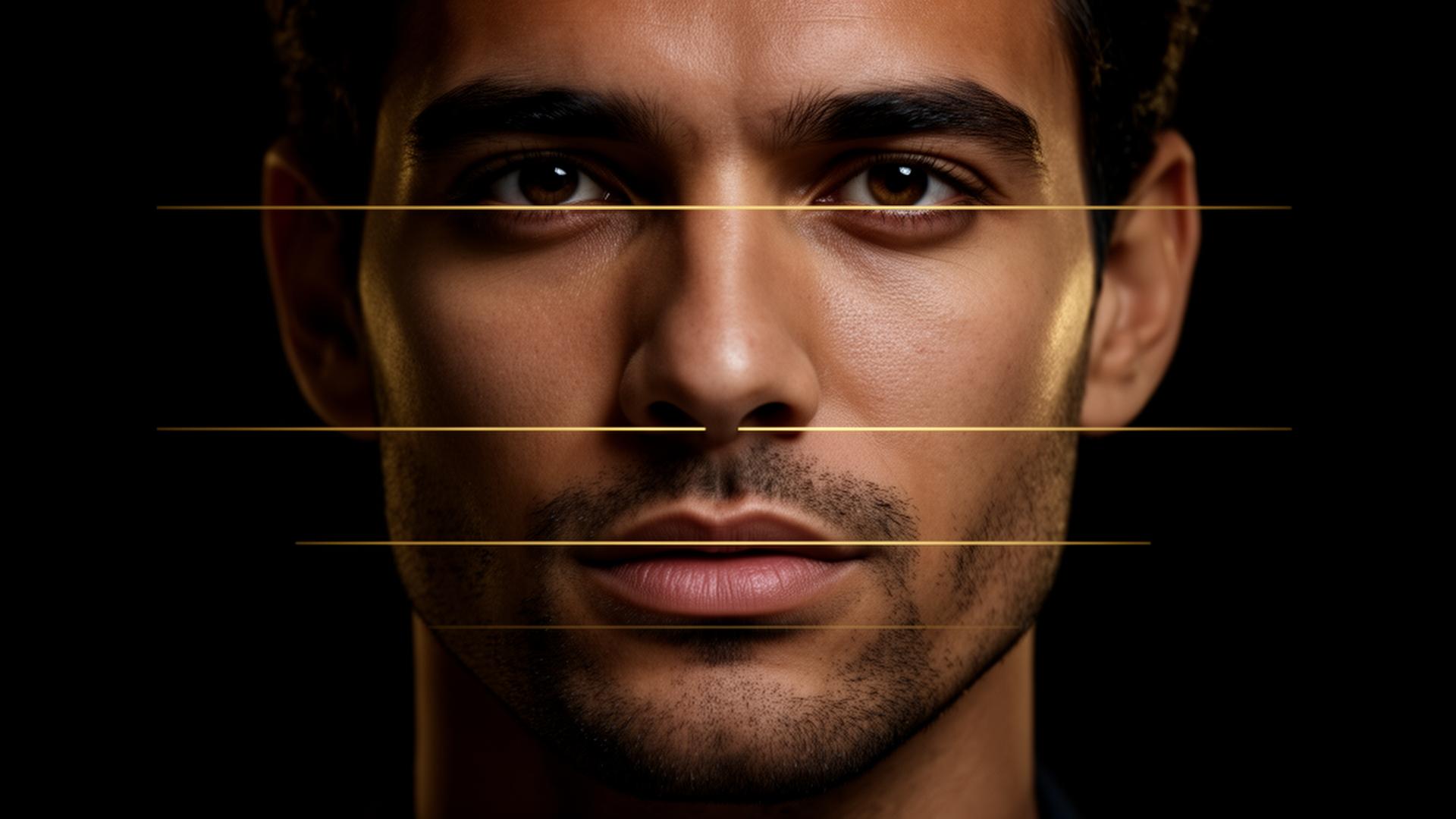
The midface ratio is the ratio of your face width to your midface vertical height, defined as the distance from the midline of the pupils to the upper lip. It is computed from bizygomatic width and midface height, which is measured from the pupils to the upper lip. Midface ratios that are larger indicate a more compact midface and yield a higher PSL score due to perceived youthfulness and structural harmony and efficiency. The male midface ratio average is said to be about 0.95–1.05. Compact midfaces are said to fall into the Chadlite categories and higher, and those that fall under 0.9 are classified as 'long midface,' which is one of the most common structural fails that impacts PSL score, and is one that no amount of eye work or jaw work can remedy. Body fat and skin might be more versatile, but the midface ratio is almost entirely fixed with the skeletal structure. Therefore, most people's aim is accurate measurement of their midface ratio, and a practical assessment with the constraints perceived.
People that participate in looksmaxxing can usually name their gonial angle and their canthal tilt, yet midface ratios are generally unknown. This is representative of a strange phenomenon, since the midface is the largest and most central region of the face.
Having a long midface is one of the most silent structurally fails and most stubbornly drags a PSL score. Because of the lack of a dramatic name to describe it like the so-called "hollow cheeks" or "hunter eyes," it frequently goes undiagnosed in self-assessments.
This article breaks down the midface ratio, guides you on how to measure yours, explains why it is important to PSL scoring, and what the reality is of altering it.
Understanding the midface ratio
The midface ratio gauges the dimensions of the midface, which is the central third of the face. To find the height of the midface, start from the line of the pupils and go down to where the upper lip and the philtrum meet. The height of the midface is also the width of the midface.
The midface ratio = bizygomatic width / midface height
The ratio is greater if the midface is compact. A ratio less than one indicates the midface is long.
The most common misconception is thinking a midface is of a quality length. For example, a tall person with a large head, can actually have a great midface ratio, if their face is proportionally wide. Midfaces are about ratios, not measurements. Two men can have the exact same measurement from the pupils to the lip, and score differently, if one has a narrow face and the other has wide cheekbones.
Most people in the community who are referring to "long midface" are different degrees of low midface ratio. Naming it correctly is the first step to assessing it correctly.
Why a Compact Midface Scores Better on PSL
A compact midface (higher ratio) scores better due to three compounding reasons.
1. The first reason is that it shows developmental robustness. Midface compactness is due to positive forward growth of the maxilla (upper jaw) that is more anterior-superior growing than inferior growth. More forward maxillary growth is linked to optimal tongue posture and nasal breathing, leading to more robust craniofacial development. A more forward grown face will have a shorter, wider, and more compact midface. In contrast, a more downward grown face will have a long midface and is typically associated with mouth breathing and poor posture of the tongue. PSL scoring favors midface compactness because, similar to gonial angle, it is a subconscious assessment of developmental quality.
2. The second reason is that it scores better because it shows youth. The midface lengthens as a person grows older. With aging, the midface typically descends and becomes elongated. Therefore, a compact midface is perceived to be more youthful and PSL scoring is weighted on age and therefore midface compactness is more favorable.
3. No single part of the face is more powerful to control perception of facial harmony than the midface. Since the midface is the central third, its relative size defines everything else. If the midface is long, then the eyes are perceived to be small (as they are relatively far apart from each other, and above the base of the mid-nasal point), the nose is perceived to be longer (as it is relatively longer in the vertical domain), and the lower third is perceived to be longer. The midface is the most powerful component of the score perception system. It is also the most powerful component of the facial harmony score.
Measuring the midface ratio (Do this carefully, as it is not found anywhere else)
The rules for your picture are:
- Front facing
- Taken at eye level
- Head is level
- Neutral expression
- No hair on the face
Once you have the picture, you will do the following:
Step 1: Determine your bizygomatic width. Measure the distance between the outer edges of each of your cheek bones.
Step 2: Determine midface height. Measure the distance between two lines that are drawn horizontally (one that is drawn through the centers of your pupils and the other that is drawn at the base of the upper lip).
Step 3: The Ratio. Midface ratio = width (W) / height (H)
Interpreting the result:
- A ratio near 1.0 indicates that the width of your cheekbones is approximately equal to the height of your midface. This is considered average in the population sample.
- Above 1.0, your face is wider than midface is tall. This is compact and appealing.
- Below 1.0, your midface is taller than your face is wider. This is an unappealing longer face.
Two key measurement cautions. First, distance from the camera distorts this significantly. A close-up selfie makes the nose and face appear wider and midface appear longer. Use a photo taken from at least an arm's length away, preferably taken from a further distance and zoom. Second, head tilt destroys the measurement. A chin down tilt shorts midface and flatters the ratio, chin up does the opposite. The head needs to be level. This is one of the many reasons that AI measurement outperforms manual self-assessment: a trained AI model can distance and tilt the camera in a way that a human assessing a selfie cannot.
The most accurate looksmax AI face rater.
PSL Rank analyzes 10+ facial categories — jawline, canthal tilt, symmetry, and more — then builds your personalized glow-up plan.
Population Data
Given that midface ratios are compound metrics rather than single, designated points, there is even less anthropometric data published compared to other metrics, such as the gonial angle. However, the combination of craniofacial literature and community-level measurement projects provides sufficient data for reasonable tiering.
| Midface Ratio | Reference | PSL Tier Impact |
|---|---|---|
| 1.20+ | Exceptionally compact | Strong halo, Chadlite floor and above |
| 1.10–1.19 | Clearly compact | Halo, HTN+ to Chadlite |
| 1.00–1.09 | Mildly compact | Neutral to mild halo |
| 0.93–0.99 | Population average | Neutral |
| 0.85–0.92 | Mildly long | Failo, drags otherwise competitive faces |
| Below 0.85 | Long midface | Significant failo, hard tier cap |
The average male midface ratio is in the range of 0.93 to 1.05. There is the important asymmetry in midface ratios, as with the gonial angle and the canthal tilt; the penalty for long midfaces is proportionally bigger than the reward for compact ones. A long midface is a structural failo, which the eye recognizes instantly, even if it can't articulate it. This is why, even with no single bad feature, community ratings often describe a long midface as a face that "doesn't come together".
About ethnicity and sex: midface ratio norms tend to shift with population groups. While balanced shifting midface averages will favorable shift compact, in female PSL assessments a compact midface is favorable and serves as a youth signal (i.e., strongest signals) but with a different optimum band and a midface that is very wide will likely be interpreted as more broad (i.e., a robust midface) in a male face (i.e., PSL assessment).
How midface ratio interacts with other measurements
In PSL measurements, the midface is typically seen in conjunction with other ratios.
Midface ratio and the eyes. The relationship between a long midface and a short eye region appears to be direct and more or less proportional. In a long midface, the eyes and midface appear more isolated and the eye region smaller as compared to the rest of the midface. In this regard, a long midface with eye traits is likely to score weaker than the same compact midface with eye traits (i.e., midface supports the eye region). This is likely the reason that the midfacial assessment with its eye traits scores more or less the same usually gets a poor midfacial to eye assessment even though the eye traits are fine.
Midface ratio and the nose. The nose is positioned on the midface. On a long midface, the nose has an increased amount of vertical space, and often looks longer and more prominent, even if it is average in size. The average length of the nose, in fact, is often on the longer side for many men, and the long midface is to blame, not the nose. The goal cannot focus on reducing perceived nose length, as this cannot be accomplished. The focus should be midface, as it is the major player in the goal of nasal improvement.
Midface ratio and the lower third. The effect of a long midface is to shorten the lower third of the face. The compression of the lower third can make the jaw and chin appear small, even if they are actually strong. A long midface can make a man look as though he has a weak lower third of the face, even if he has a strong chin and gonial angle. There is an effect of compression of the lower third of the face, which is occupied by the midface and the lower third.
Compounding perception.
The midface is the most proportional area of the face. It has the closest thing to an ideal ratio of the eyes, the nose, and the lower third. This is likely why some people in the community say that everyone's features are nice, but they don't work together. Usually a low midface ratio is the likely cause. This is also the reason why balancing a single adjacent feature — the nose, the jaw, etc. — so often tends to fail to move the overall read. This is because the issue is the proportion of the features which is upstream of everything.
The three most significant midface problems
Mistake 1: People tend to confuse the length of the midface with the length of the overall face. These two are separate. A long face can still have a really nice midface ratio if the length is distributed into the upper or lower thirds of the face. The same is also true if a relatively short face has an unbalanced midface that is an overwhelming proportion of the overall face. The midface ratio must always be measured specifically as the distance between the pupils and the upper lip in relation to the width of the midface, not the entire face.
Mistake 2: The most costly mistake is attributing midface issues to the nose. This misconception leads to rhinoplasty for no reason. The only way to know for sure if the nose is too prominent is to calculate the midface ratio. A long midface makes the nose appear long, while a short midface makes the nose appear short. Solutions are likely to reside in the balance of ratios instead of balance of features.
Mistake 3: Thinking adjustments in the midface imply no further assessment is needed. This isn't as true for the midface as the rest of the body. Your midface carries your most valuable information: your midface ratio. Knowing your midface ratio is invaluable because it can save someone the unnecessary effort and money of making changes to the features of the face that do not need to change and instead focus on the changes that do need to be made. Changes are proportioned rather than features.
The most accurate looksmax AI face rater.
PSL Rank analyzes 10+ facial categories — jawline, canthal tilt, symmetry, and more — then builds your personalized glow-up plan.
Things You Can Change
Without undergoing Lefort or other maxillofacial surgeries, the adult bony midface ratio is unchangeable. Those surgeries are very invasive and very risky, and they are not recommended in facelifts for looks. How the existing ratio reads is where work is done for the greater population.
Body fat and fullness of the midface. Higher body fat accommodates fullness of the midface which can modify the midface width, but fullness in the lower face and the submental region can detract from the jawline which can be negatively impacted more than the midface impacted positively. Lower body fat allows definition of the cheekbones. This may adjust the width of the midface relative to the lower body fat, and this can positively impact the perception of the midface to width ratio, which remains unchanged in the bone structure.
Definition of cheekbones and posture of the face. Appearance of the bizygomatic width midface more makes the ratio read greater. The primary factor is lower body fat. Beyond that factor, the angle from which the face is observed most can impact the ratio. A midface that is less than, or equal to, is lengthened when the angle of the face is viewed with the chin slightly elevated, and a midface that is more than, or equal to, is shortened by a perfectly horizontal chin, or slightly lowered.
Hair can change the perception of facial proportions like almost nothing else can. An ideal hairstyle for a long-midface type would maximize width at the sides and the stature of the sides of the face, while minimizing the height added to the top. Height added to the top of the hair will add height to the perceived length of the face and create an unfavorable ratio. A midface textural style cut with a bit of width at the sides can counter a long midface, while a tall quiff can add to it. A compact-midface type has a bit more leeway and added height is fine.
Facial Hair Placement
Facial hair can add weight to whatever portion of the face it occupies. A long-midface type can get facial hair to add weight to the lower third of the face to re-establish some balance among the vertical thirds. The lower third of the face is dominated by the midface and a short, full beard adds weight and substantially shorter the share of the midfac. A well groomed and fuller mustache also shortens the segment of the midface between the base of the nose and upper lip.
Glasses and Brow Framing
Mid-length hair with good volume at the top and weight at the sides shortens the gap of the vertical thirds of the face. It can also draw attention to the upper levels of the face and shift the visual perception from the lower areas of the face making the gap between the eyes and the base of the nose less.
None of these things alter the bone structure. Stacked together — lean body fat, hair that is wider at the sides, lower-third facial hair, an angle of photo that clear, etc. — can alter the perceived midface ratio enough to matter within a social distance, which is the only distance a midface ratio scoring system cares about.
Midface ratio and the midface ratio scoring system
Within the midface ratio scoring system, the midface is analyzed as a component of the central-third of the face and is an important contributor to the facial harmony score. Because of its ability to alter the perceived distance of the eyes and nose, and lower-third of the face, its tier impact is greater than its single-category weighting.
Sub5 to LTN range: a long midface is frequently seen, and often overlooked. At this tier range, it is common to see evaluations that cite the nose or eyes as the failo, when the underlying cause is a low midface ratio, which is distorting both.
MTN range: Midface ratio is typically around the population average. A face at MTN with a compact midface is being held back elsewhere – jaw, eyes, skin. A face at MTN with a long midface would often be rated HTN if the midface were compact, since a compact midface would elevate the perceived attractiveness of the adjacent features.
HTN range: Most HTN faces have at least an average, often mildly compact, midface. A genuinely long midface is rare at HTN because of its cumulative drag on the eyes, nose, and lower third of the face, would typically prevent a face from reaching that tier in the first place.
Chadlite and Above: A concise midface may be considered universal. Evaluating Chadlite faces, community assessments almost always identify some variation of a short, broad, and, often, nearly harmonious central third, and descriptors such as "compact," "everything is close together," or "no wasted space" are often used. Those descriptors represent a very high midface ratio in quantitative terms.
With regards to ascension planning, the conclusion is simple. For capped PSL ratings, individuals often don't know the reason why these ratings are set. When the individual features of a face seem to score 'fine,' yet the overall rating is low, the midface ratio should be examined before all else. It is the most frequently observed concealed factor for a face that appears to score lower than the sum of its individual features.
The most accurate looksmax AI face rater.
PSL Rank analyzes 10+ facial categories — jawline, canthal tilt, symmetry, and more — then builds your personalized glow-up plan.
Discussion
The midface ratio (bizygomatic width to the pupil-to-lip distance) may be the most frequently disregarded trait of a high midface ratio that offers the greatest influence on a PSL score. A concise midface conveys youthfulness as well as robustness and harmony and casts a favorable influence a facia overall. Conversely, a long midface has the opposite effect and contributes to a perception of reduced harmony and balance to the midface as well as the features of the lower and upper thirds of the face. This is often why a long midface is overlooked in most self-assessments as well as evaluations of the nose and the eyes.
The bony ratio does not change after adulthood, but knowing it is the single greatest value diagnostic you can offer, because it lets you know if your real failo is the feature you are blaming or the bone structure ratio sitting underneath it. While you can't alter the bone structure, the stacked perceptual levers — hair leanness, hairstyle, lower third facial hair, photo taken from an apple's angle — can shift the read at the only distance that matters.
If your face underperforms relative to its features, know your midface ratio before you spend more money or time on anything else.
The most accurate looksmax AI face rater.
PSL Rank analyzes 10+ facial categories — jawline, canthal tilt, symmetry, and more — then builds your personalized glow-up plan.